
Why Companies Hire Risk Analysts
Jan 22, 2026
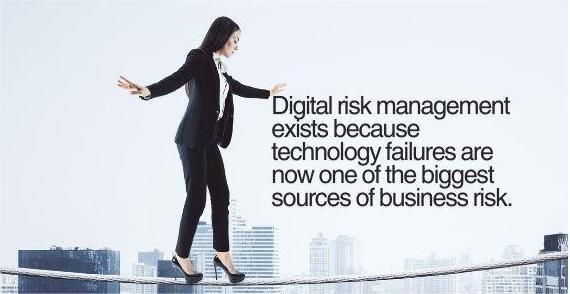
Digital risk management may just be one of the least explained but most practical early-career paths in modern business.
For most students, technology careers fall into two buckets. You either build technology, or you use it. Digital risk management sits quietly in a third bucket that is rarely explained in classrooms but deeply valued inside companies: making sure technology does not quietly break the business.
Every organization today runs on software systems. Payments, inventory, customer records, forecasting, HR, compliance and reporting are all digital processes. When these processes fail, the impact is more than technical – it is financial, legal and reputational.
Digital risk management exists because technology failures are now one of the biggest sources of business risk. Put plainly, it is about identifying where technology-driven processes might fail and reducing the damage when they do – a sort of quality control for how technology is used in real work. A digital risk team asks questions like:
● Where does this data come from and who checks it?
● What happens if this system goes down for a day?
● Who has access to this tool and should they?
● If an error occurs, how fast will anyone notice?
These questions may sound simple, but they protect companies from very expensive mistakes.
According to IBM’s Cost of a Data Breach Report 2024, the average cost of a data breach globally was about $4.45 million in 2023, with human error and process failure among the top causes. Technology alone rarely causes disasters. Poor controls around technology do.
Why this matters to students
Students often assume risk roles are senior, boring, or regulatory. In reality, digital risk is increasingly an entry-level hiring area because organizations need people who can understand processes early and document them clearly.
Banks, consulting firms, fintechs, e-commerce companies and even startups now maintain dedicated technology or operations risk teams. Gartner has estimated that unplanned IT downtime costs large organizations an average of $300,000 per hour, depending on industry. That cost creates steady demand for risk professionals who prevent small failures from becoming large ones.
For students, this translates into something practical: companies will hire you to think clearly, not code brilliantly. In internships and entry-level roles, digital risk work is hands-on and operational.
- An intern at a bank may be asked to map how a trade confirmation flows from a front-office system into a reporting database. The goal is understanding where errors could creep in.
- A junior analyst in a consulting firm may test whether monthly controls were actually performed. That might involve checking Excel files, reviewing timestamps and confirming approvals.
- A risk associate at a startup may review who has access to customer data in Google Sheets and internal dashboards. The task is to ensure that people who no longer need access do not still have it.
The tools are simple
One reason students underestimate digital risk careers is that the tools look ordinary. Most digital risk work happens in:
● Excel for tracking issues and testing controls
● PowerPoint for explaining risks to managers
● Google Docs for documenting processes
● Email and collaboration tools for follow-ups
Even AI tools like ChatGPT increasingly show up to help draft reports, summarize findings, or clarify technical explanations. Simple tools used precisely.
In fact, as companies adopt AI for credit scoring, fraud detection, forecasting and customer service, new risks emerge. According to McKinsey’s State of AI 2024 report, over 70 percent of organizations now use AI in at least one business function, but many lack formal oversight processes. Risk teams now ask questions such as:
● Is the training data biased or outdated?
● Who reviews AI-generated outputs?
● What happens when the model makes a confident mistake?
Entry-level professionals are often tasked with documenting these AI workflows and ensuring there is accountability. You do not need to build models to work on AI risk. You need to understand how outputs affect decisions.
A strong early-career foundation
Digital risk management roles offer something many first jobs do not: structured exposure to how businesses actually operate. Early-career professionals learn how data flows, how approvals work, how failures are detected and how managers respond to issues. These insights are valuable across careers.
Many professionals later move from digital risk into operations leadership, consulting, compliance, or strategy. The role builds judgment before specialization. Importantly, it also rewards clarity. People who can explain a messy process simply tend to advance faster than those who rely on jargon. Students can start by:
● Practicing clear written explanations of processes
● Becoming comfortable auditing their own Excel work
● Asking 'what could go wrong' in everyday systems
● Learning basic statistics and data reasoning
● Using AI tools to improve clarity, not avoid thinking
According to the World Economic Forum’s Future of Jobs Report 2023, analytical thinking, attention to detail and systems thinking are among the fastest-growing skill demands globally. Digital risk roles sit exactly at that intersection.
The quiet advantage
Digital risk management rarely features in placement brochures or career talks. Yet it quietly underpins modern business. For early-career professionals, it offers something rare: a way to enter large or complex organizations, learn how decisions are actually made and build durable skills without needing to be technical.
The next time a system works smoothly, a report is accurate, or a problem is caught early, someone in a digital risk role helped make that happen. For many students, that is not a bad place to begin a career.
Social Media
Digital risk management is about understanding systems, spotting problems early and protecting businesses. A strong, underrated first-job option for curious students.
#Careers #DigitalRisk #BusinessTechnology #EarlyCareer #PraxisBusinessSchool #AIAndJobs
Admissions Open - January 2026