
Why Operations Jobs Are Becoming Tech Jobs
Jan 24, 2026
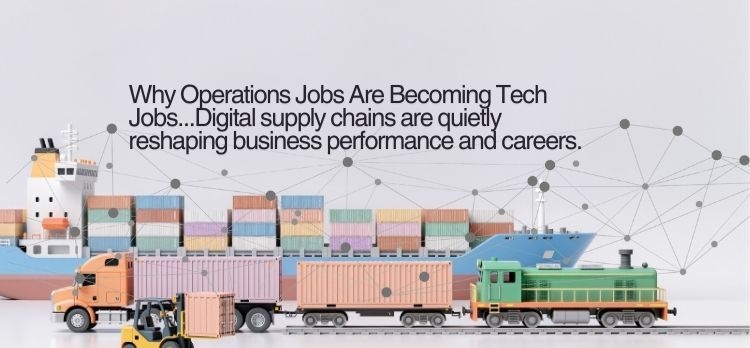
Digital supply chains are quietly reshaping business performance and careers.
As companies pursue faster deliveries and lower costs, the software and data systems behind how products move from factories to end users are now strategic. For students headed into entry-level roles, grasping what supply chain technology is and why it matters gives you an edge that feels concrete on day one.
The ABCs of Supply Chain Technology
A supply chain covers all steps involved in making and delivering goods: sourcing materials, manufacturing, transporting items, storing them and finally selling them to customers. Supply chain technology refers to software, sensors and analytics that make this complex flow visible, predictable and manageable. Rather than relying on siloed spreadsheets and guesswork, organizations now use real-time data and automated tools so that decisions are based on facts.
Consider Walmart’s deployment of millions of Internet of Things (IoT) sensors across U.S. stores and pallets. These sensors feed real-time data into tracking systems so managers know exactly where products are and under what conditions. The result is fewer stockouts and fewer surprise delays.
Supply chains make or break business outcomes. A $50 trillion global industry generates huge volumes of data every day – far too much for traditional spreadsheets to handle. Companies increasingly depend on systems that can analyze data, predict demand and automate responses.
Forecasting is one area where technology makes a measurable difference. McKinsey analysis suggests that AI-driven forecasting can cut prediction errors by up to 50%, reducing costly mismatches between supply and demand. That means fewer products sitting unsold in warehouses and fewer disappointed customers.
For a student stepping into an internship or analyst role, these tools determine real decisions you might be asked to communicate: whether to reorder inventory, how to adjust production plans, or why a shipment is late.
How Supply Chain Tech Shows Up in Junior Roles
You don’t need to be a coder to work with supply chain technology. Most early work involves understanding outputs and translating them into actions:
● Demand forecasts in Excel: Look at forecasts produced by analytics tools and test whether they match what you see in the market.
● Inventory dashboards: Pull reports from enterprise systems to explain why safety stock is higher than planned.
● Operations coordination: Use email and shared docs to communicate delays and propose mitigation steps.
● Vendor tracking: Monitor shipment statuses and flag exceptions before managers ask.
These tasks teach you to interpret systems and communicate insights – skills that quickly make you indispensable.
Retailer Macy’s, for example, recently modernized its warehouse with automated robotics and warehouse management systems to fulfill online orders in under a day. The technology shifts repetitive work to machines and lets human workers focus on quality control and exception handling.
Hyundai’s new AI-driven manufacturing plant integrates digital twins and robotics so workers can focus on problem solving, not manual tasks. Even in highly automated environments, human roles are about understanding and acting on data, not replacing people.
The Skill Set That Actually Matters
Successful early-career contributors in supply chain technology combine:
● Analytical literacy: Comfort with numbers and basic models in Excel.
● Curiosity about systems: Knowing which reports to trust and when to question anomalies.
● Communication: Turning data and dashboards into clear narratives for teams.
● Process thinking: Mapping how orders move from sales to delivery.
You do not need advanced AI skills yet. But you do need to understand what data means and how to turn it into decisions.
Companies that embrace digital supply chains outperform peers in responsiveness and resilience. A growing body of research shows that digital supply chain capabilities improve competitiveness and firm performance. In a world where disruptions are common, from pandemics to geopolitical shocks, organizations value employees who can navigate systems and translate complexity into clarity.
For students, this translates directly into job relevance on day one and a career trajectory into roles like supply chain analyst, operations planner, logistics coordinator and business analyst.
● Supply chain technology is about making data visible and useful, not about mysterious “AI buzzwords.”
● Early roles emphasize interpretation and communication, not coding.
● Excel, dashboards and system outputs are tools you will use.
● Understanding workflows beats memorizing jargon.
Next time you use an app to track a delivery or see stock levels in an online store, ask yourself: what data powers this view? That question trains your mind for value in the workplace.
#supplychain #careers #operations #digitaltransformation #businessstudents #PraxisBusinessSchool
Admissions Open - January 2026