
A Beginner’s Guide to Fraud Detection Careers
Feb 11, 2026
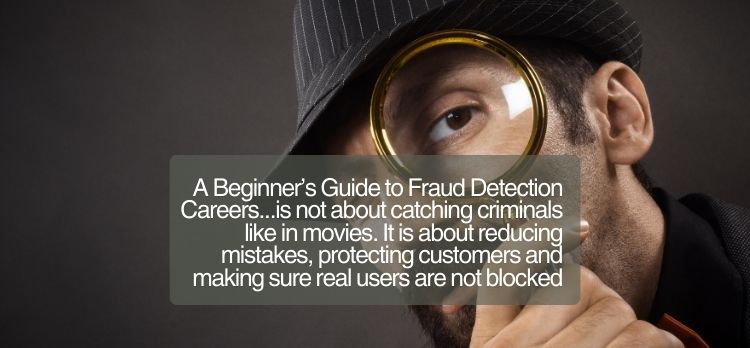
How banks and digital platforms quietly stop fraud at scale and why this is becoming a strong entry-level career path for analytical graduates.
Fraud detection is the process of spotting activity that looks suspicious before it causes damage. Think stolen cards, fake accounts, refund abuse or unusual payment patterns. No one sits and checks every transaction manually. A large bank or app handles millions of transactions every day. Instead, systems flag what looks odd. Humans then decide what to do next.
A simple analogy helps. Imagine your college attendance sheet. If one student suddenly shows up in three classrooms at the same time, something feels off. Fraud detection works the same way. Patterns that do not make sense get flagged.
The job is not about catching criminals like in movies. It is about reducing mistakes, protecting customers and making sure real users are not blocked unnecessarily.
Why should students care right now?
Three reasons:
- First, fraud is growing fast. As more payments, shopping and banking move online, fraud grows with it. Companies cannot ignore it.
- Second, this work sits at the intersection of business and analytics. You do not need a computer science degree. You need structured thinking.
- Third, companies are actively hiring graduates for these teams. Banks, fintech apps, e-commerce platforms and payment companies all need people who can think clearly about data and behavior.
For early careers, this is rare. Many analytics roles ask for years of experience. Fraud operations often train fresh graduates on the job.
At a high level, it works in three layers:
- Rules. Simple logic like blocking a card used in two countries within minutes.
- Models. More advanced systems learn patterns from past fraud cases.
- Humans. Analysts review flagged cases and make final calls.
Your entry-level role usually sits in the third layer. You look at alerts generated by systems and decide whether something is genuinely risky using transaction history, user behavior, location data and timing patterns. Over time, you start seeing signals quickly.
What does this look like in an internship or first job?
A typical day might include:
- Reviewing flagged transactions in a dashboard
- Checking patterns using Excel filters and pivots
- Writing short notes explaining why a case looks risky
- Escalating complex cases to senior analysts
- Helping update simple rules that reduce false alarms
You might work with tools that feel familiar. Excel, internal dashboards, ticketing systems, sometimes SQL or basic Python later on. PowerPoint shows up too. Teams regularly explain trends to managers. Clear slides matter most.
What skills actually matter here?
- Analytical thinking. Can you explain why something looks unusual?
- Comfort with data. You should not fear rows, columns and filters.
- Clear writing. Decisions must be documented simply.
- Judgment. Blocking the wrong customer is expensive.
- Calm under pressure. Fraud spikes during sales or festivals.
Many top performers in fraud teams come from commerce, economics, statistics or general management backgrounds. Students must:
- Learn Excel deeply. Filters, pivots, logical thinking
- Practice explaining decisions clearly in writing
- Follow how digital payments and fintech work
- Use ChatGPT to practice explaining patterns simply
- Look for internships labeled risk, fraud or operations
- Treat this as an analytics apprenticeship
AI in fraud detection mostly means pattern recognition. Systems learn from past fraud cases and spot similarities. They narrow down what needs attention. As a junior analyst, AI is your assistant. It gives you a shortlist. You decide.
This is why fraud roles are a gentle way to enter AI-adjacent careers. You work with intelligent systems without needing to build them.
Where does this career lead?
Several paths open up:
- Senior fraud analyst
- Risk strategy roles
- Product roles in payments or lending
- Compliance and risk management
- Data analytics and model oversight
Many people use fraud operations as a launchpad. The skills transfer well across finance, tech and consulting.
Fraud detection may not sound glamorous. But it teaches you how real businesses use data to make high-stakes decisions. That skill compounds fast.
#Careers #FraudDetection #AnalyticsJobs #EarlyCareer #Fintech #BusinessSchool #Praxis
Admissions Open - January 2026