
Why Digital Onboarding Operations Hire So Many Fresh Graduates
Feb 12, 2026
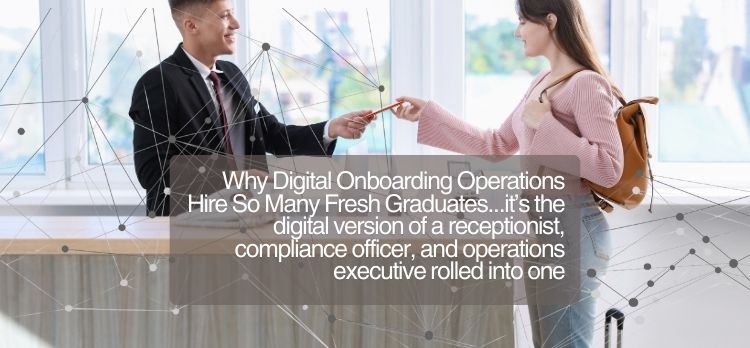
Digital onboarding operations offer high-volume hiring, fast learning and early exposure to AI-driven processes that power modern businesses.
Every time you open a bank account online, sign up for a fintech app or activate a corporate service, something important happens behind the scenes. The company checks who you are, verifies your documents and decides whether to activate your account.
That entire process is called digital onboarding.
Think of it as the digital version of a receptionist, compliance officer, and operations executive rolled into one system. Instead of face-to-face meetings and paper files, it runs on forms, scanned documents, databases and increasingly, AI tools that speed things up.
Digital onboarding operations teams manage this flow. They review data, flag issues, handle exceptions and make sure customers are activated quickly without breaking rules. Because this is one of the fastest-growing entry-level hiring areas across banks, fintech firms, SaaS companies, and global service centers.
According to industry estimates, over 70% of new customer accounts globally are now opened digitally, up from less than 40% a decade ago. In India, fintech and digital banking growth have pushed onboarding volumes into the millions every month.
That scale creates two things students care about:
● High-volume hiring for fresh graduates
● Clear skill progression within the first two to three years
Unlike many generic operations roles, onboarding sits at the intersection of customers, technology and regulation. You are close to how revenue actually starts.
In digital onboarding, AI often works quietly in the background. For example:
● OCR tools read Aadhaar, PAN or passport scans
● Risk models flag suspicious profiles
● Automation tools route cases based on complexity
As an analyst or intern, your job is not to build these systems. Your job is to work with their outputs. You learn how machines make decisions, where they fail and when humans need to step in.
That is a rare early-career exposure. Most jobs either hide AI completely or require heavy coding. Onboarding roles sit comfortably in the middle.
How does this look in an internship or first job?
A typical day might involve:
● Reviewing flagged customer applications
● Checking mismatches between documents and forms
● Updating Excel trackers and internal dashboards
● Coordinating with compliance or tech teams
● Preparing short reports for managers
You might start with manual checks. Over time, you handle exceptions and edge cases. Eventually, you help improve the process itself.
Many managers in this space say new hires become process owners within 12 to 18 months. That means you are not just doing tasks, you are deciding how work should flow.
Digital onboarding has three features companies love:
● High transaction volumes
● Repeatable workflows
● Measurable accuracy and speed
This makes it ideal for training fresh graduates. Performance is easy to track. Skill improvement is visible. Promotions are clearer than in vague corporate roles.
Attrition is also lower when people see a learning curve. Teams often move talent into risk, compliance, product operations or analytics roles later.
Your first job here does not lock you in. It opens doors.
What skills actually matter?
Not fancy ones. Useful ones. Strong Excel skills matter more than programming, for example. Clear writing matters more than buzzwords. Attention to detail matters more than confidence.
You will regularly use:
● Excel for tracking, reconciliation and reporting
● PowerPoint for explaining process gaps
● Google Docs for standard operating procedures
● ChatGPT for drafting summaries or learning concepts
Many mid-career professionals in banking, fintech and consulting started in onboarding or operations without realizing its long-term value.
Once you understand how customers enter a system, you understand risk, revenue, compliance and user experience. That knowledge compounds. In a job market where pure generalist roles are shrinking, digital onboarding offers a structured way to grow without being overly technical.
Digital onboarding may not sound glamorous. But it teaches how modern businesses actually function. And that is a powerful place to start.
#Careers #DigitalJobs #Operations #Fintech #EarlyCareer #AIinBusiness #PraxisBusinessSchool
Admissions Open - January 2026