
India’s AI Ethics Bill Opens up Exciting Career Opportunities
Jan 18, 2026
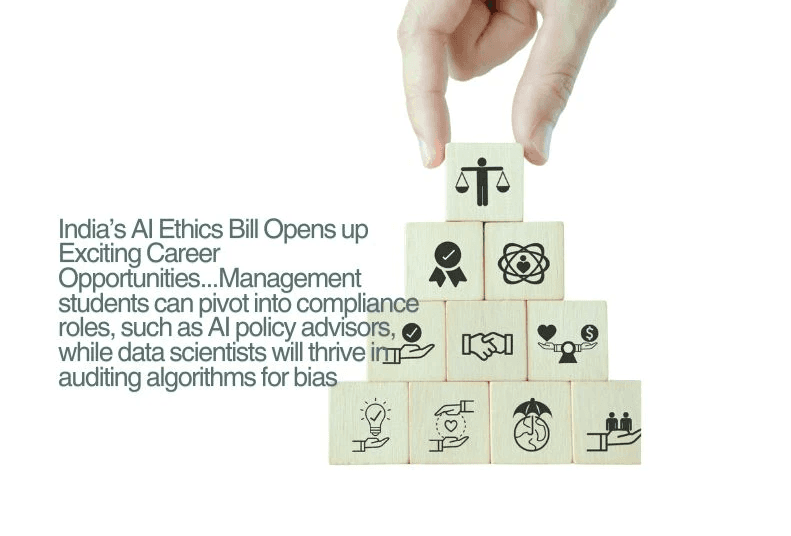
India's Artificial Intelligence (Ethics and Accountability) Bill, 2025, marks a pivotal shift toward regulated AI deployment, creating fresh career pathways for management and data science students eager to blend tech with ethics. This private member's bill, tabled in Parliament on December 17, 2025, establishes an Ethics Committee for AI oversight, imposes developer obligations like bias audits, and sets up grievance mechanisms—directly fueling demand for skilled professionals in a booming governance ecosystem. As AI adoption surges in governance, commerce, and security, the bill's framework opens doors to roles that prioritize fairness and accountability, aligning perfectly with India's digital transformation goals.
Surging AI Job Demand
India's AI sector is experiencing rapid growth, with NASSCOM projecting 1.25 million AI-related jobs by 2027, many of which will be in ethical governance due to new regulations, such as this bill. Management students can pivot into compliance roles, such as AI policy advisors, while data scientists will thrive auditing algorithms for bias in high-stakes areas like surveillance and credit scoring. The bill's emphasis on multidisciplinary committees—drawing from academia, industry, and civil society—signals thousands of openings for graduates to shape guidelines, backed by MeitY's IndiaAI Mission aiming for 10,000 ethical AI experts by 2030.
Key Roles for Data Scientists
Data science students stand to gain from mandates requiring regular bias audits, diverse training datasets, and transparent decision logs from AI developers. Roles like AI ethics auditors could see salaries averaging ₹15-25 lakhs annually, per TeamLease Digital insights, as firms comply with penalties up to ₹5 crores for violations. You'll analyze datasets for fairness in employment or law enforcement AI, using tools like fairness metrics from libraries such as AIF360, turning regulatory hurdles into career accelerators.
Management Opportunities in Oversight
For management grads, the bill's Ethics Committee creation heralds leadership positions in strategy and stakeholder engagement, overseeing everything from awareness campaigns to misuse investigations. With annual reporting to Parliament and funding from the Consolidated Fund, these roles demand skills in multi-stakeholder coordination—think McKinsey-style frameworks for AI risk mitigation. LinkedIn data shows a 40% rise in "AI governance manager" job postings since mid-2025, positioning you to lead capacity-building for deployers and users.
Skill-Building Pathways
Blend your coursework with certifications like Google's Responsible AI or IIMA's AI Ethics for Business to stand out. Internships at NASSCOM or MeitY-backed initiatives under the IndiaAI Mission offer hands-on experience in grievance redressal or surveillance approvals. This bill doesn't just regulate AI—it democratizes high-impact careers, letting you future-proof your resume in a market where ethical expertise commands premium opportunities.
This regulatory push aligns with India's AI boom, turning ethical governance into a high-demand career track for data science and management grads.
Ethics Committee Positions
The bill establishes a Central Government-backed Ethics Committee with a Chairperson skilled in ethics and technology, plus reps from academia, industry, civil society, government, law, data science, and human rights. This creates roles like AI Ethics Specialists to draft guidelines, monitor compliance, and promote stakeholder training—expect dozens of permanent spots with competitive salaries, funded via the Consolidated Fund. Annual reports to Parliament will also need Compliance Coordinators to compile findings, ensuring transparency and fueling career ladders in public-sector AI oversight.
Developer Compliance Roles
Developers face strict obligations: disclose AI purposes, data sources, training methods, and decision rationales; conduct regular bias audits with diverse datasets; and maintain ethical records, with penalties up to ₹5 crores for lapses. This births jobs like Algorithmic Bias Auditors and AI Transparency Officers, where data scientists test for discrimination in surveillance, credit, or hiring systems using fairness metrics. Companies will hire Compliance Managers to oversee audits and withdrawals of flawed models, mirroring global standards but tailored to India's high-impact domains.
Grievance and Surveillance Oversight
A dedicated grievance redressal system empowers the Ethics Committee to probe complaints, recommend remedies, and enforce penalties—including license suspensions or criminal liability for repeats. New roles emerge for Grievance Investigators and Remediation Analysts to handle affected users' claims, especially in vulnerable communities. For AI surveillance and critical decisions, Ethics Review Officers will vet deployments for prior approval, prohibiting bias on race, religion, or gender—driving demand for Risk Assessors skilled in constitutional fairness.
Broader Career Ecosystem
These provisions ripple outward, creating hybrid roles like AI Policy Strategists for industry-capacity building and Stakeholder Liaisons for civil society input. With the bill complementing laws like data protection, firms need Integrated Compliance Leads to harmonize frameworks. Management students can lead multi-stakeholder teams, while data pros build audit tools—positioning graduates in a ₹1 lakh crore AI market projected to need thousands of ethics pros by 2030.
Admissions Open - January 2026